Landline
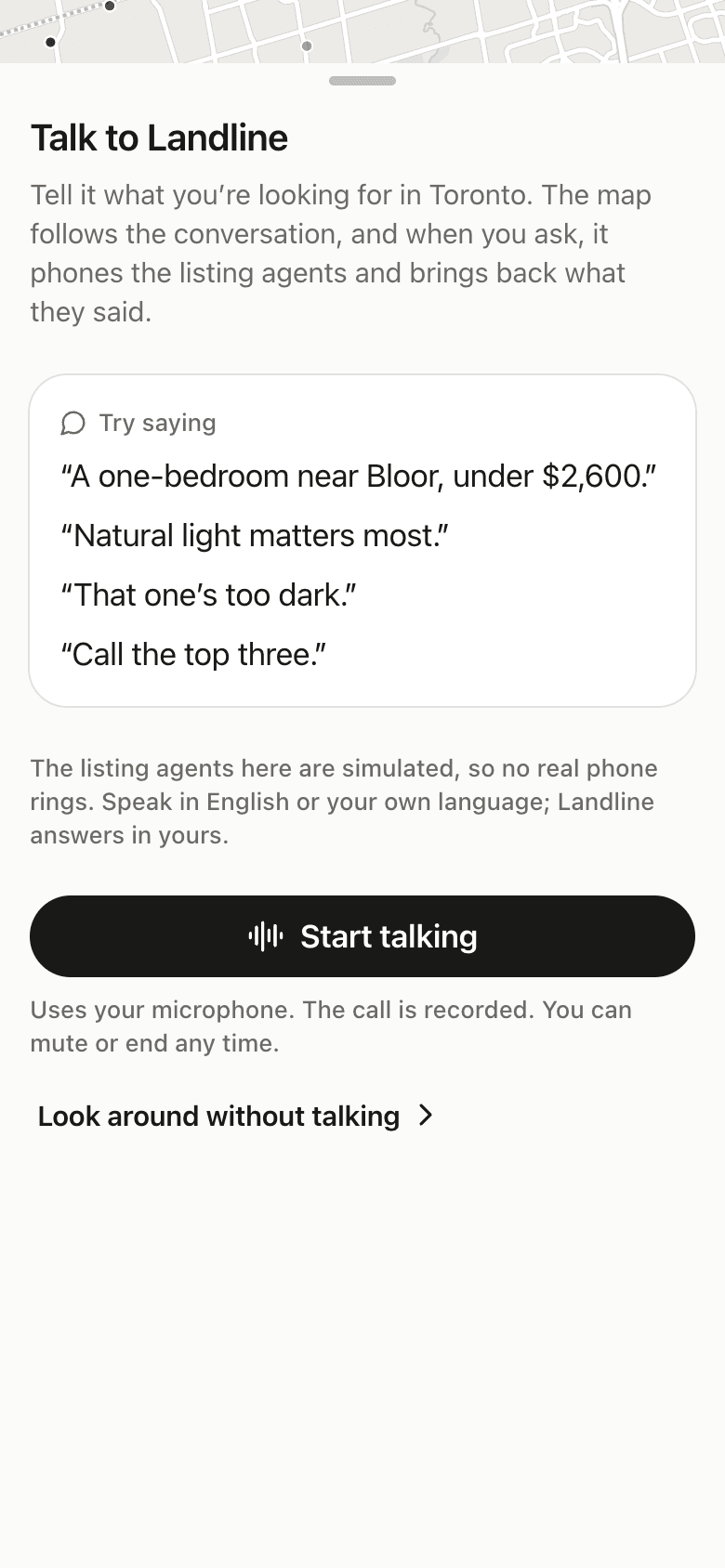
A voice agent for Toronto renters: you talk, a live map re-ranks, then it phones the listing agents and texts you what they said.
Problem
Toronto rental listings leave out what renters most need to know: is it still available, what does parking really cost, are dogs allowed. Renters chased agents one call at a time, and those agents work for the landlord.
My role
Web app, Expo app and read API on a team of 3. I wrote 36% of the code: 74% of the web app, all of the Expo app and 63% of the API. That covers the rebuilt board and its detail views, judge mode on /try, the read API’s captions and outcomes, and sign-in. Voice, agents and data were mostly my teammates’ work; my part there was fixes, like the agent’s tool use and its goodbyes.
How it works
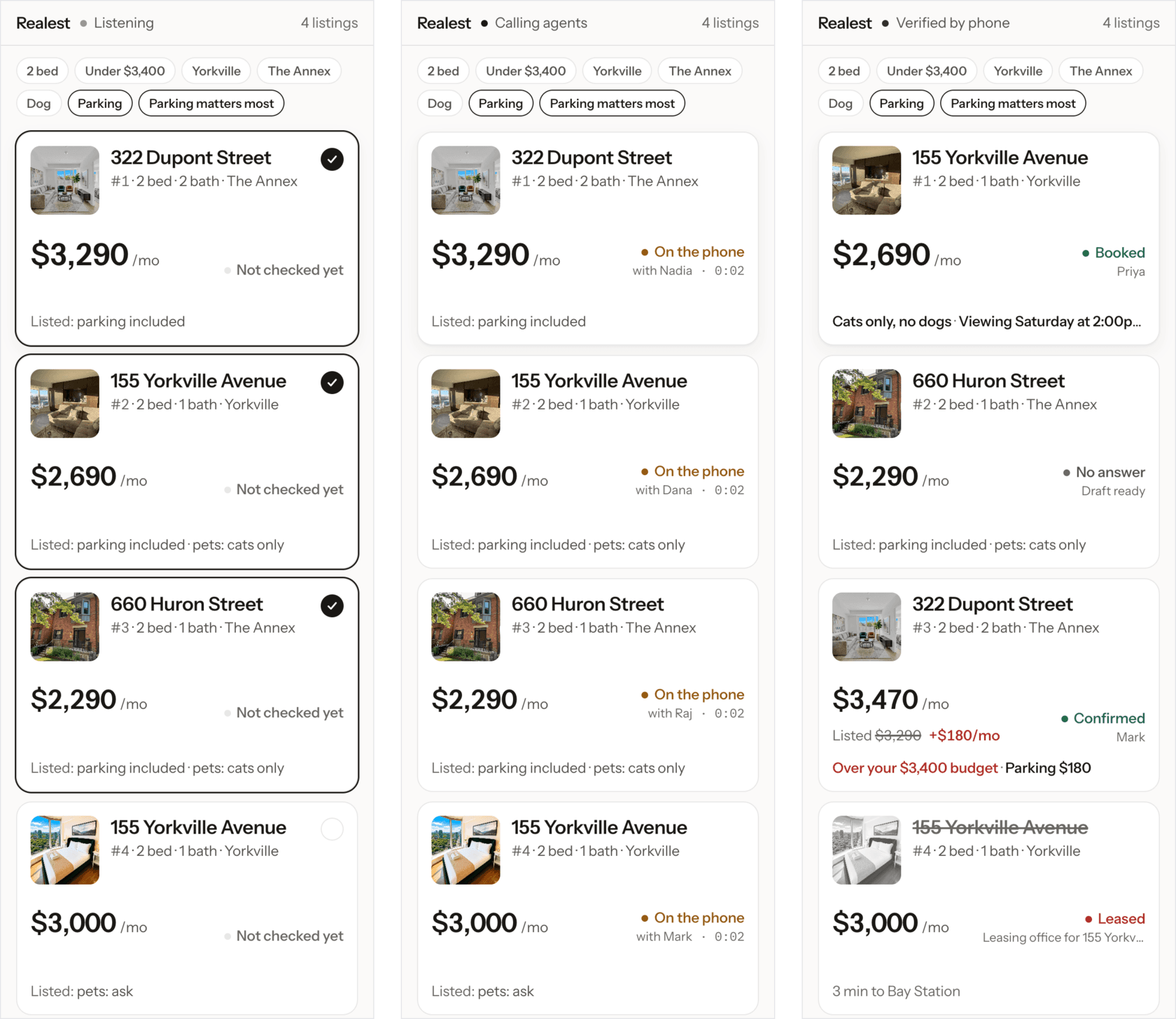
A voice agent on Boson AI’s Higgs Realtime turns what the renter says into a brief, and the server re-ranks the board and streams each change to a live map. The calls go out in parallel over Twilio, and an auditor keeps only what the listing agent actually said. It grew out of Realest, which we built at an earlier hackathon.
Talk, and the map re-ranks
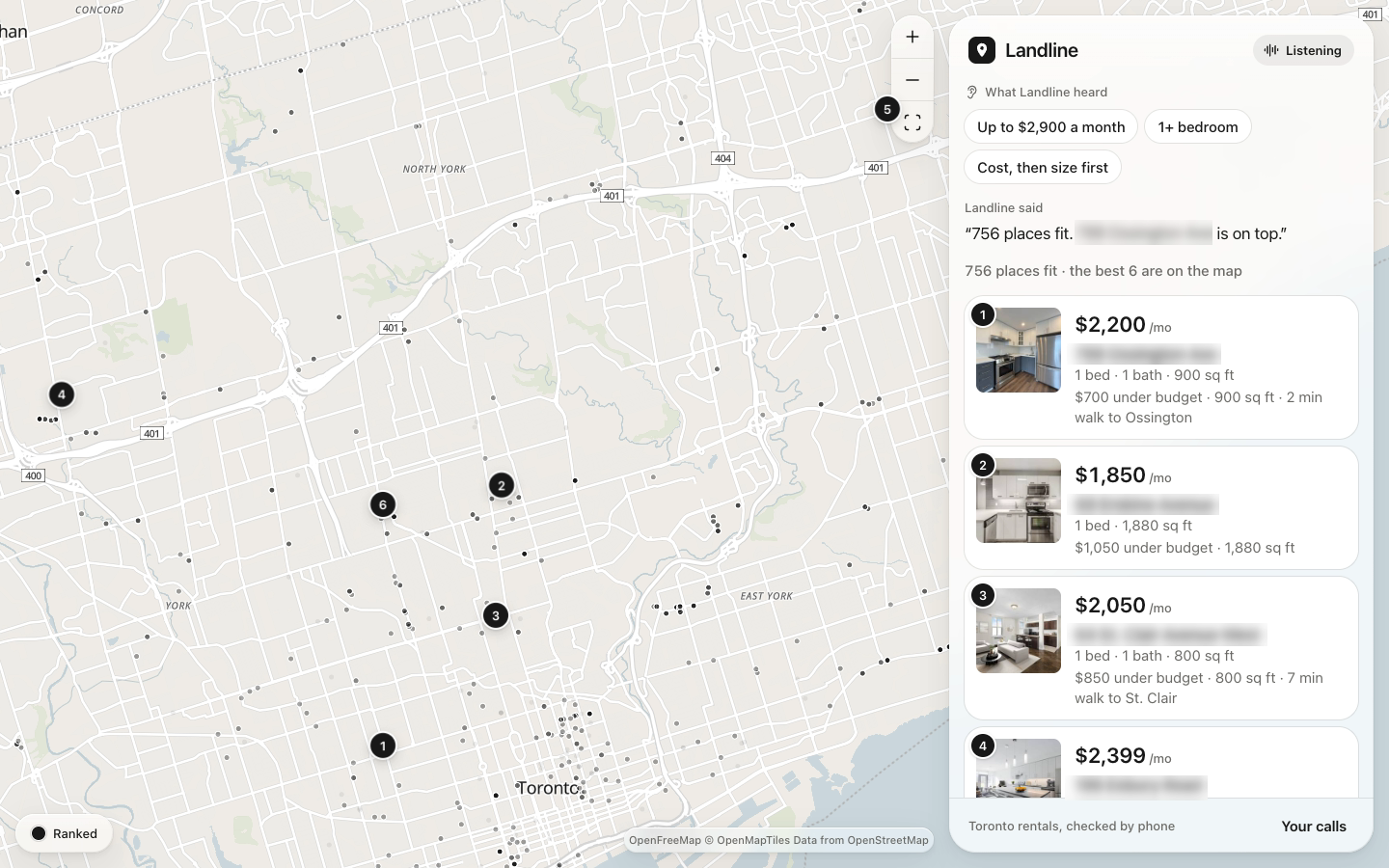
The renter says what they want, like a one-bedroom up to $2,900. The voice agent saves each preference, and every save re-ranks the board on the live map.
Calls in parallel
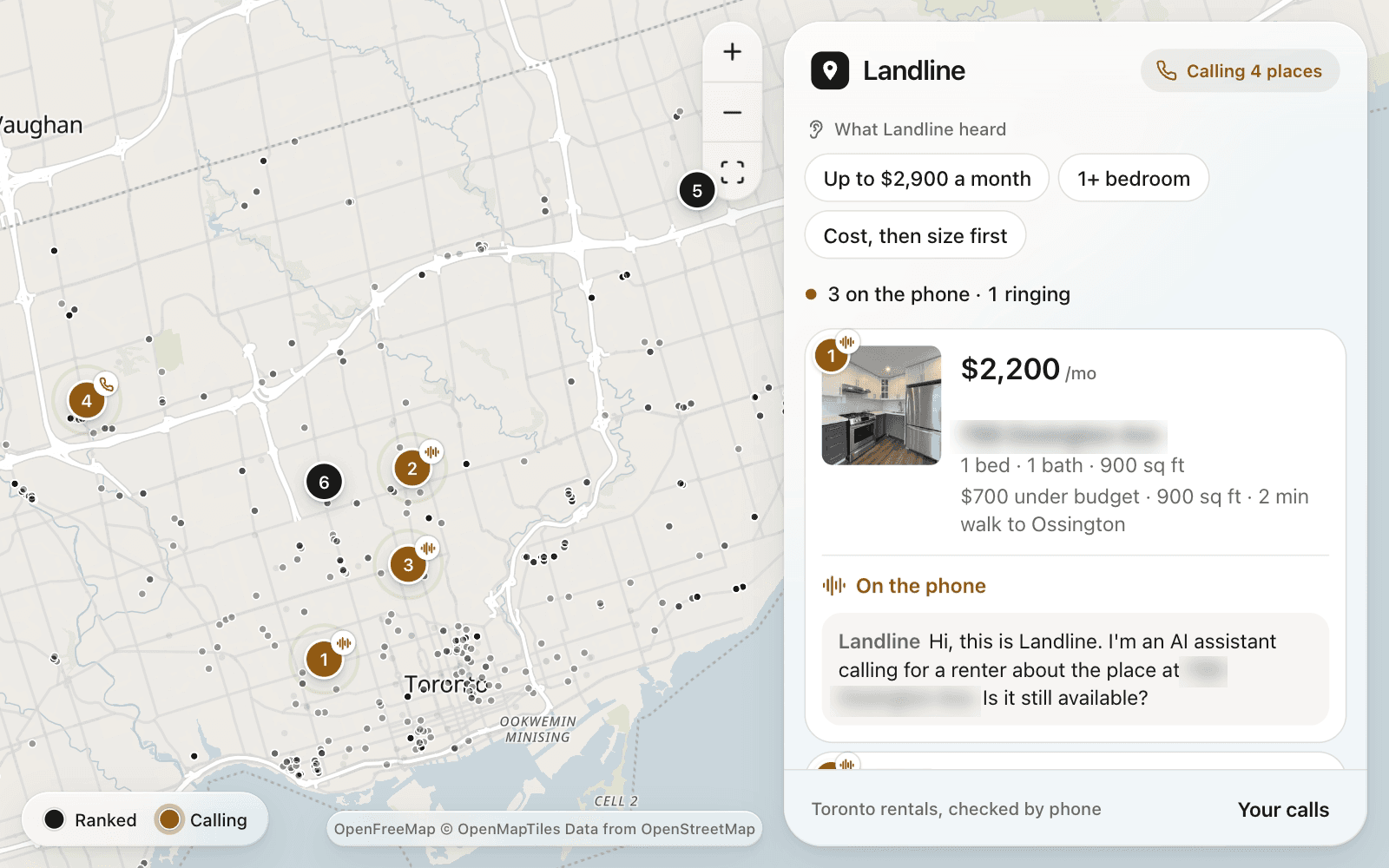
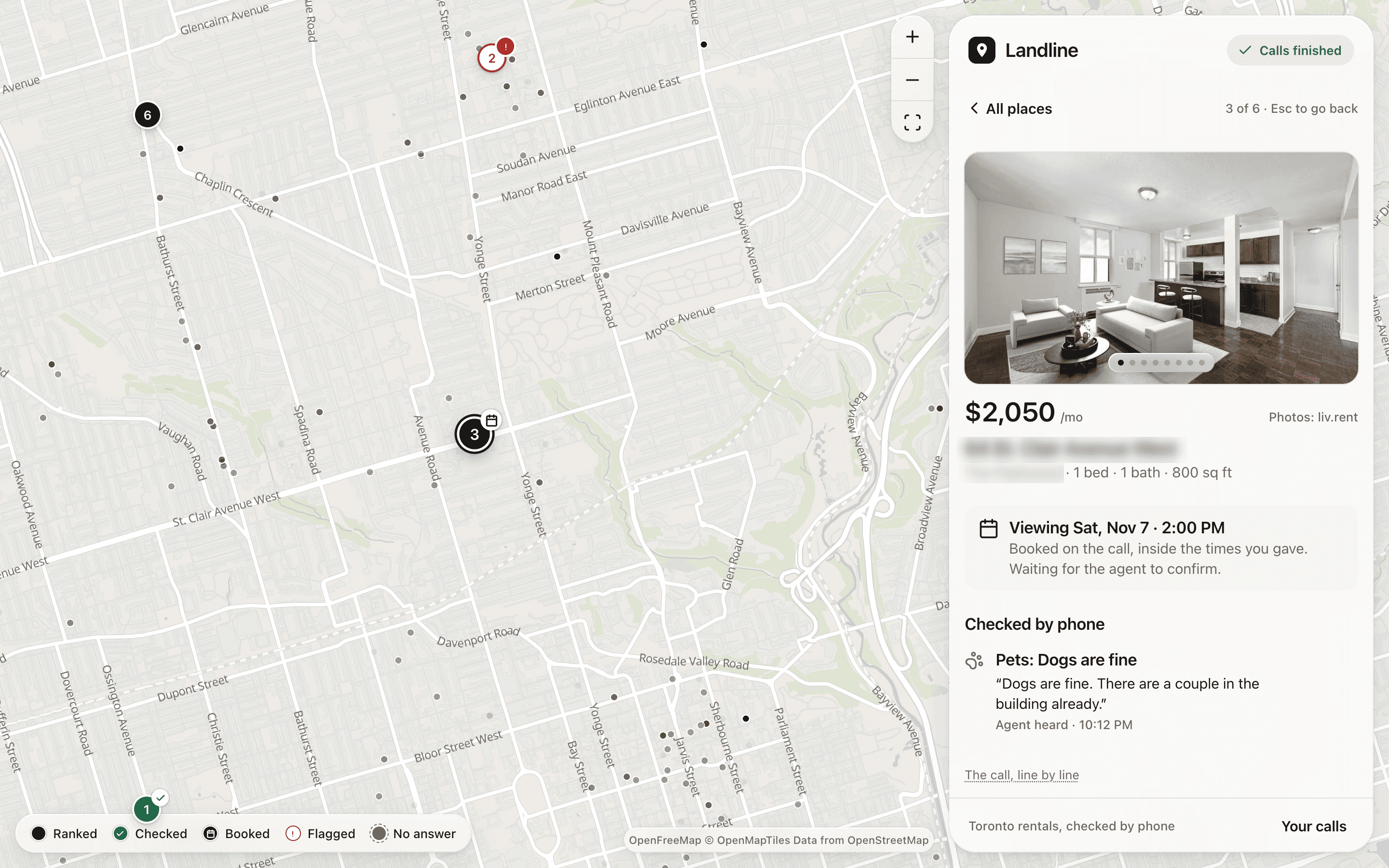
Hanging up freezes the plan. Each listing then gets its own caller, dialing in parallel, and only numbers on an allowlist can be called.
Facts, then a text
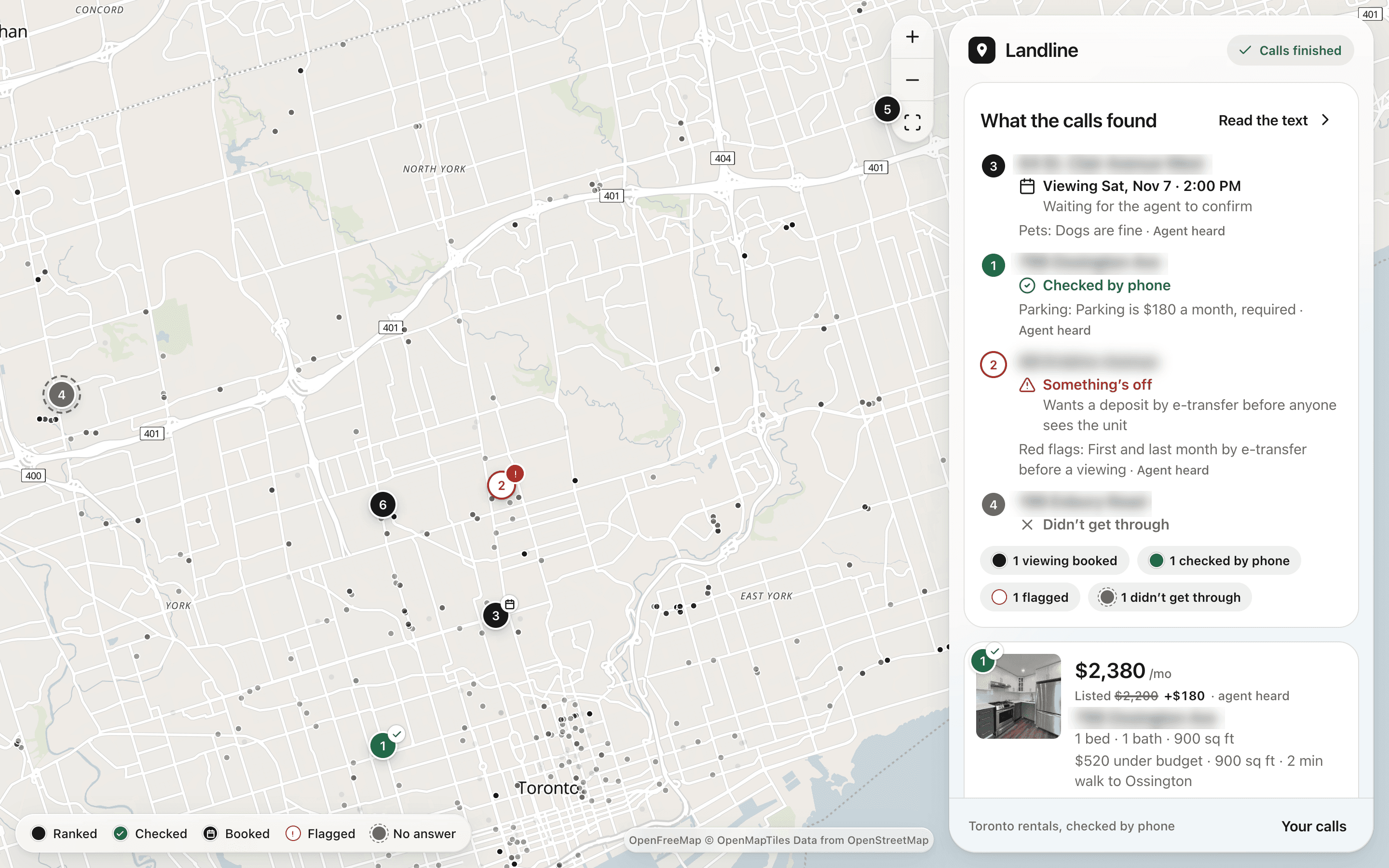
A fact counts only if its quote is in what the listing agent said. The answers re-rank the cards, and the renter gets a text with what each agent said.
The product
Demo day
Where it is now
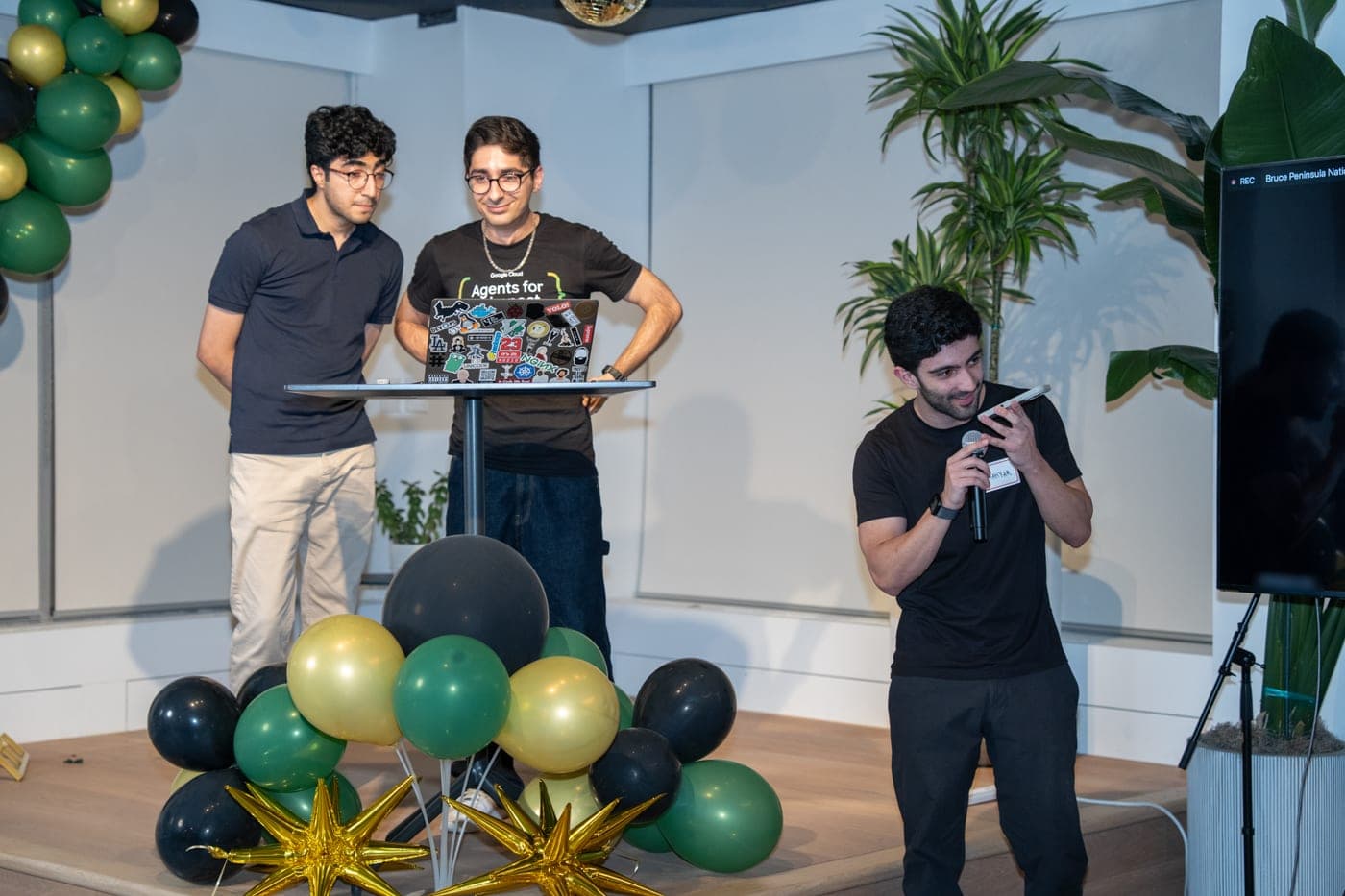
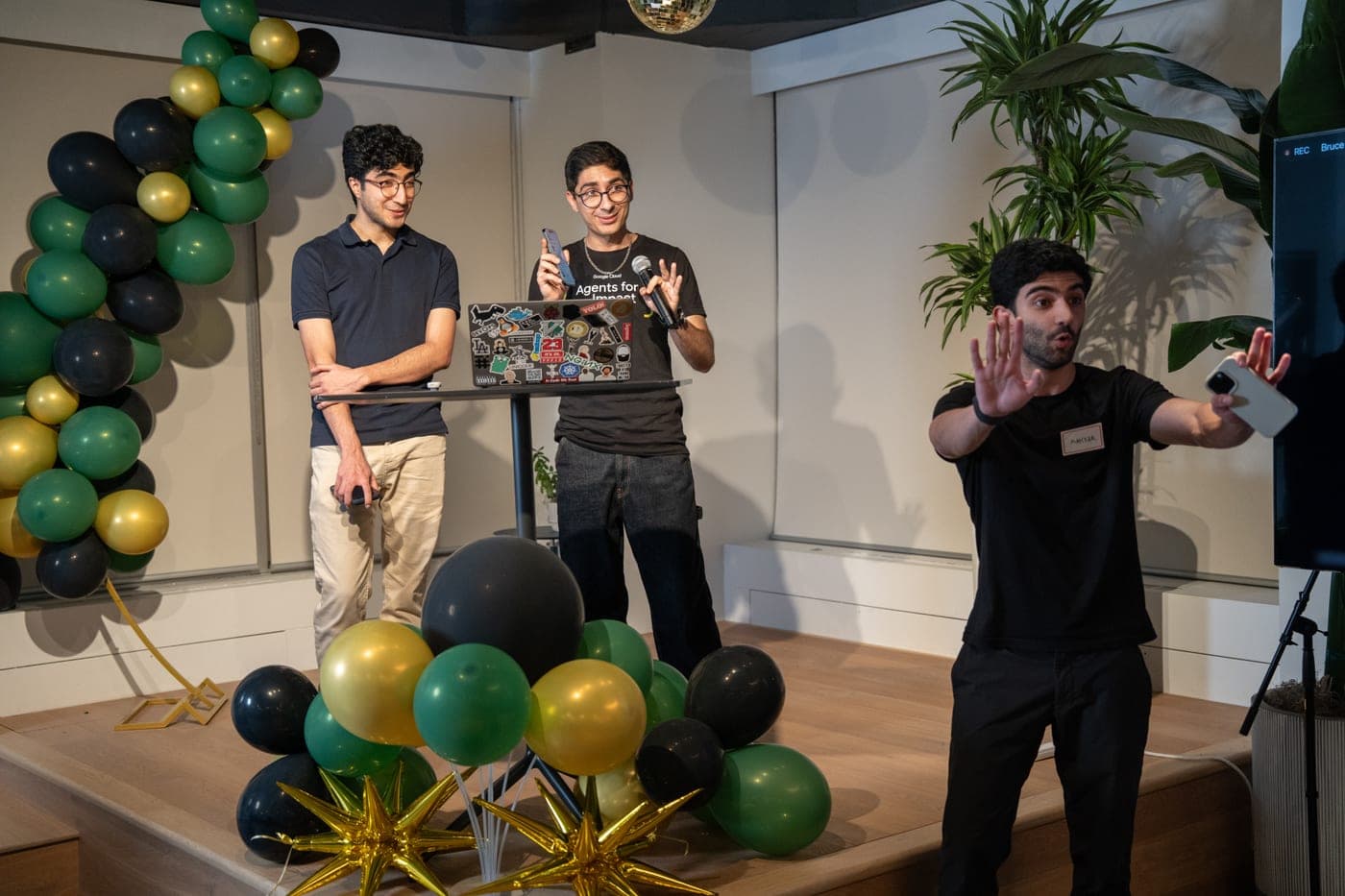
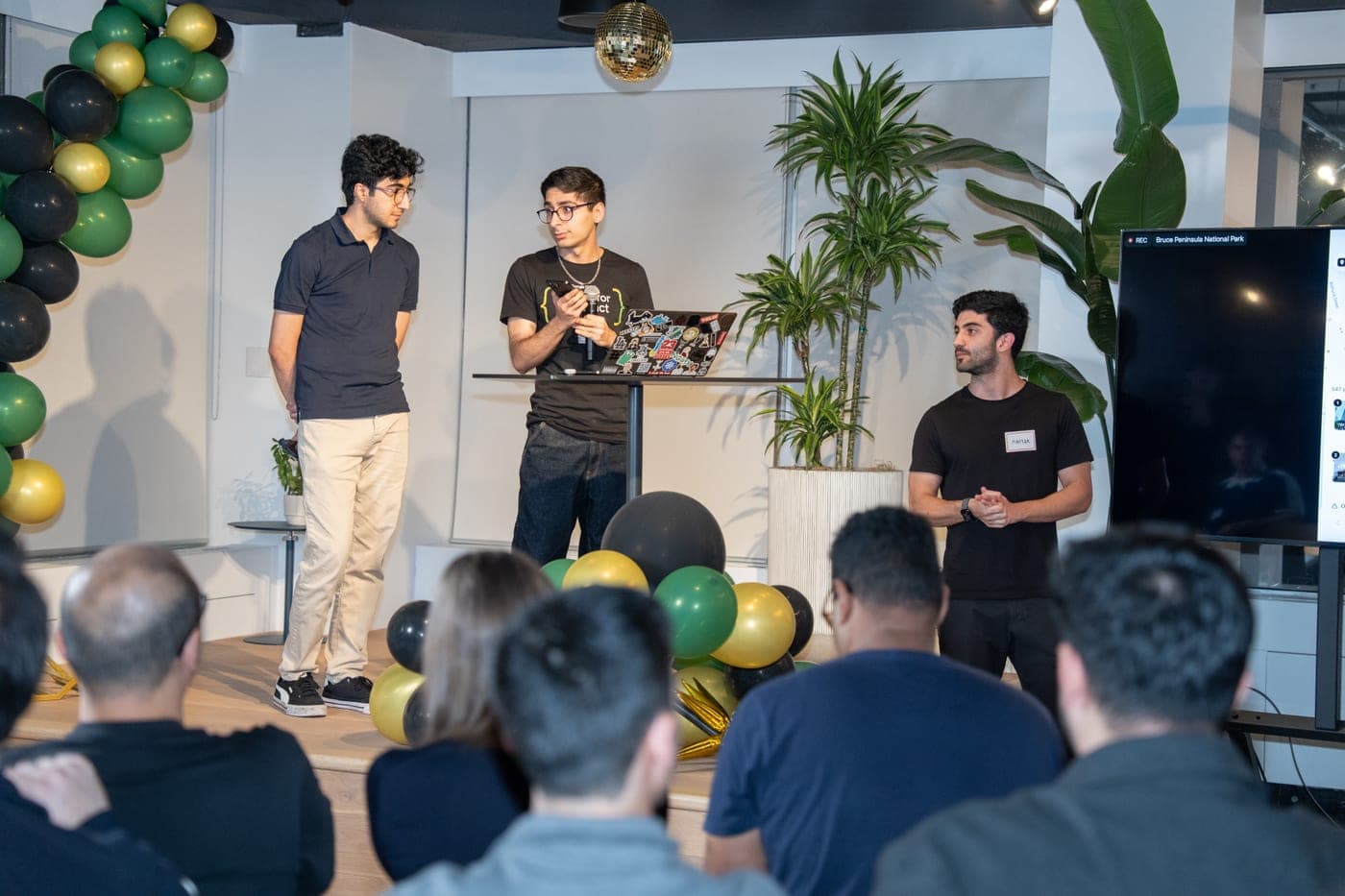
We built it at the Boson AI Higgs Audio Hackathon on October 23 and 24, 2026, and placed 3rd of 30+ teams. We kept building it for Georgian Build North’s demo day, where we were one of ten finalists. It is still live, with a scripted demo that dials no one. No real renter has used it: its calls only ever reached the team’s own phones.
- 7/21 → 0/21Voice sessions where the agent skipped its tools, before and after my fix
- 10/15 → 15/15Goodbyes in other languages that ended the call, on the tune set
- 473 → 186 kBFirst-load JavaScript of the live board page
Next project